
| Form |
Powder
|
| Packaging Size |
1 Kg
|
| Packaging Type |
Packet
|
| Color |
White
|
| Grade |
Bio Tech Grade
|
| Target Crops |
Vegetables
|
| Brand |
Hunter
|
| Purity |
99%
|
| Availability |
In Stock
|
| Usages |
2kg / Acre
|
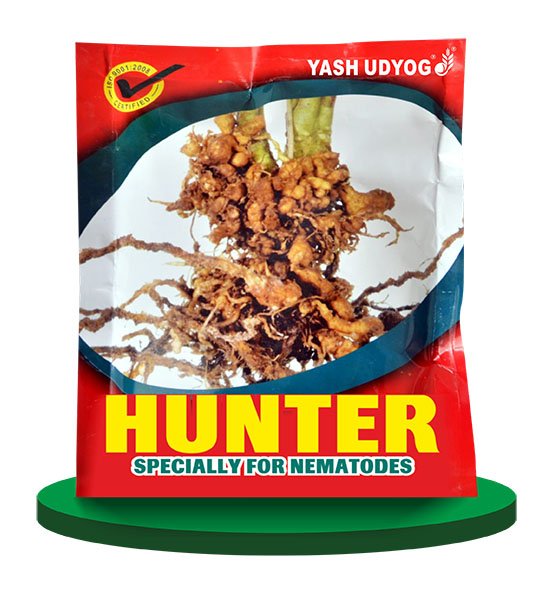
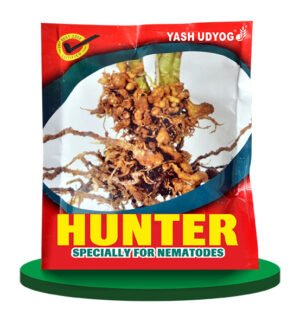
Biofertilizers specifically for the control of nematodes, often referred to as Bionematicides or Bio-Control Agents for Nematodes, are products containing beneficial microorganisms that act as natural enemies to plant-parasitic nematodes. They offer an environmentally friendly and sustainable alternative to chemical nematicides.
Here is a description of these specialized biofertilizers:
Key Components
These biofertilizers are typically formulated with various beneficial microbial organisms, including:
- Nematophagous Fungi (Nematode-Eating Fungi):
- Mechanism: These fungi are parasites of nematodes. They actively colonize the soil and the plant root zone, where they attack and parasitize nematode eggs, juveniles, and sometimes adults. They secrete enzymes (like chitinase and proteases) that degrade the nematode eggshells or penetrate the nematode cuticle, disrupting their development and killing them.
- Beneficial Bacteria (Plant Growth-Promoting Rhizobacteria – PGPR):
- Examples: Bacillus subtilis, Bacillus firmus, Bacillus cereus, Paenibacillus polymyxa, and Pseudomonas fluorescens.
- Mechanism: These bacteria suppress nematode populations through several methods:
- Direct Toxicity: They produce toxic secondary metabolites, lytic enzymes, or insecticidal crystal proteins that are nematicidal (kill nematodes).
- Induced Systemic Resistance (ISR): They trigger the plant’s natural defense mechanisms, making the host plant less susceptible to nematode infection.
- Competition: They rapidly colonize the rhizosphere (root zone), competing with nematodes for space and nutrients.
- Plant Growth Promotion: As a secondary benefit, they often enhance plant growth by fixing nitrogen, solubilizing phosphorus, or producing phytohormones, which helps the plant overcome the damage caused by nematode feeding.
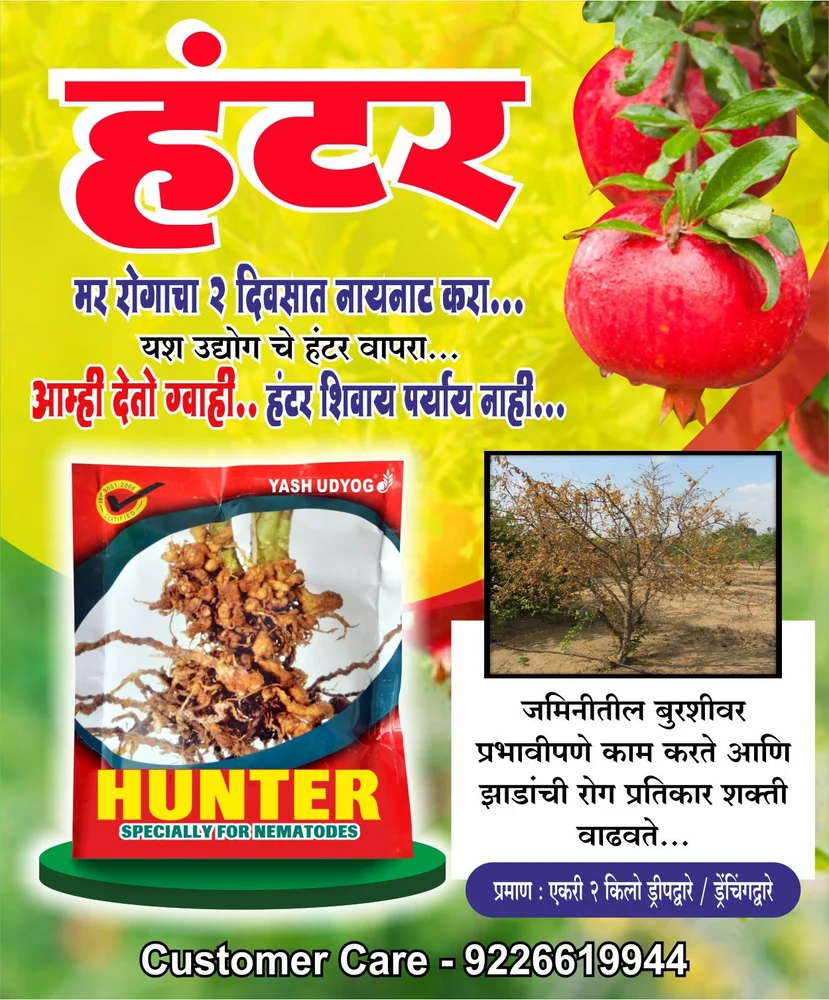
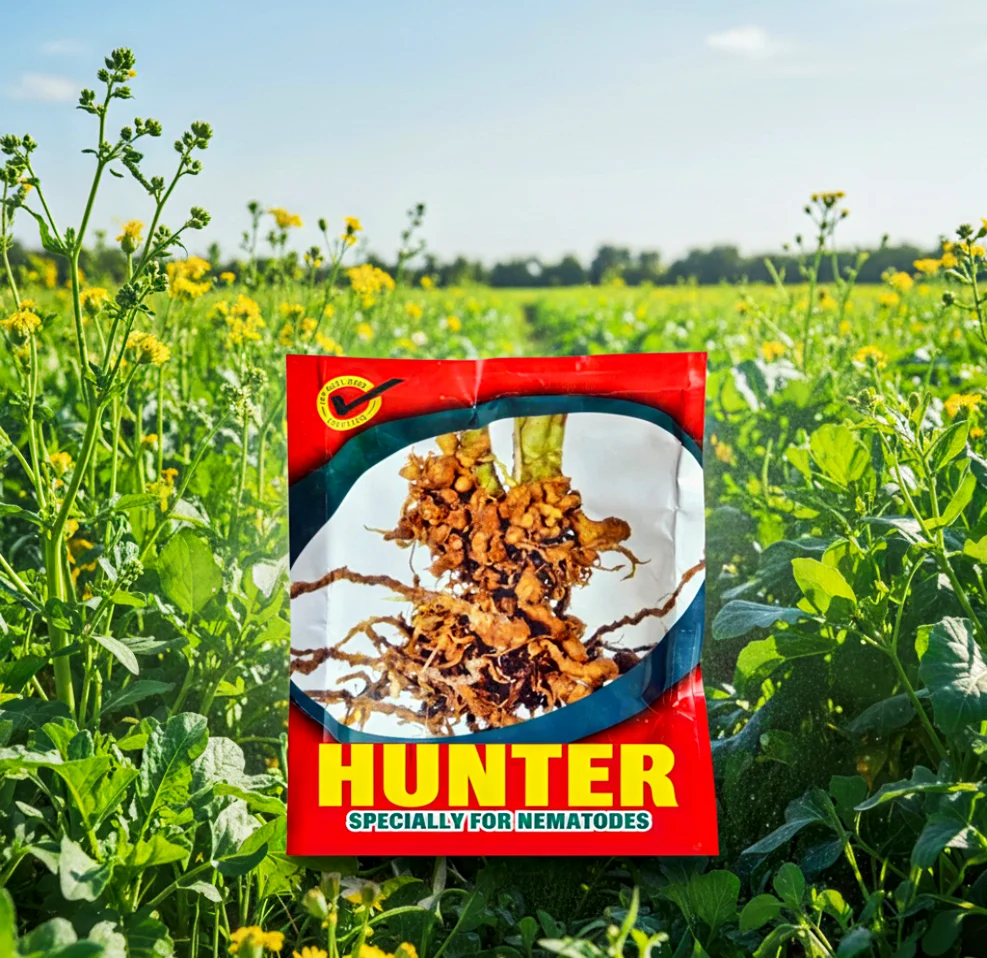
Control Root-Knot and Cyst Nematodes with HUNTER. Advanced bio-nematicide for Pomegranate, Grapes & Vegetables. Protect root health and boost yields. Shop now!
Reviews
There are no reviews yet.